
Industry News 120
Published on 20-05-2026
Why Climate-Resilient Agriculture Is Critical for Global Food Security
WHY CLIMATE-RESILIENT AGRICULTURE IS CRITICAL
The future of global food systems may depend less on how much we produce — and more on how resilient agriculture becomes in the face of climate disruption.
Across continents, agriculture is already experiencing the effects of rising temperatures, water scarcity, soil degradation, biodiversity loss, and unpredictable weather events. According to the United Nations Food and Agriculture Organization (FAO), climate change is one of the greatest threats to long-term food security globally.
Extreme climate events are no longer isolated agricultural risks. They are becoming structural realities that influence crop productivity, livestock systems, food supply chains, trade stability, and global nutrition security.
As the global population moves toward an estimated 9.7 billion by 2050, the challenge is no longer simply feeding more people. The challenge is sustaining reliable food systems under increasing environmental pressure.
Across continents, agriculture is already experiencing the effects of rising temperatures, water scarcity, soil degradation, biodiversity loss, and unpredictable weather events. According to the United Nations Food and Agriculture Organization (FAO), climate change is one of the greatest threats to long-term food security globally.
Extreme climate events are no longer isolated agricultural risks. They are becoming structural realities that influence crop productivity, livestock systems, food supply chains, trade stability, and global nutrition security.
As the global population moves toward an estimated 9.7 billion by 2050, the challenge is no longer simply feeding more people. The challenge is sustaining reliable food systems under increasing environmental pressure.
CLIMATE CHANGE IS RESHAPING AGRICULTURE FASTER THAN EXPECTED
Agriculture remains one of the most climate-sensitive sectors in the world.
The Intergovernmental Panel on Climate Change (IPCC) has repeatedly warned that rising global temperatures are expected to reduce crop yields in many vulnerable regions, particularly across Africa, Asia, and parts of Latin America.
Meanwhile:
Food systems built for stability are now operating in uncertainty.
The Intergovernmental Panel on Climate Change (IPCC) has repeatedly warned that rising global temperatures are expected to reduce crop yields in many vulnerable regions, particularly across Africa, Asia, and parts of Latin America.
Meanwhile:
- drought frequency is increasing globally
- water stress is intensifying in major agricultural regions
- soil fertility decline is accelerating
- pest and disease outbreaks are expanding geographically
- unpredictable rainfall patterns are disrupting planting cycles
Food systems built for stability are now operating in uncertainty.
WHAT IS CLIMATE-RESILIENT AGRICULTURE?
Climate-resilient agriculture refers to farming systems designed to adapt, recover, and remain productive despite climate-related disruptions.
It combines sustainability, innovation, and adaptive agricultural practices to strengthen long-term food security while reducing environmental impact.
Climate-resilient agricultural systems often include:
The goal is resilience.
It combines sustainability, innovation, and adaptive agricultural practices to strengthen long-term food security while reducing environmental impact.
Climate-resilient agricultural systems often include:
- precision irrigation systems
- drought-resistant crop varieties
- regenerative farming practices
- AI-powered crop monitoring
- soil carbon restoration
- integrated water management
- biodiversity-focused farming models
- climate-smart agricultural technologies
The goal is resilience.
WHY GLOBAL FOOD SECURITY DEPENDS ON AGRICULTURAL RESILIENCE
Global food security is deeply interconnected with environmental stability, economic systems, public health, and geopolitical resilience.
When agricultural systems fail, the effects extend far beyond farms.
Food inflation rises. Supply chains weaken. Rural livelihoods collapse. Nutritional inequality expands. Political instability increases.
Climate-resilient agriculture helps reduce these risks by strengthening the adaptability of food systems at local, regional, and global levels.
Countries investing early in sustainable food systems are likely to become more resilient to future climate shocks, trade disruptions, and resource scarcity.
This is why climate resilience is increasingly becoming central to agricultural policy discussions, international sustainability frameworks, and global research collaboration.
When agricultural systems fail, the effects extend far beyond farms.
Food inflation rises. Supply chains weaken. Rural livelihoods collapse. Nutritional inequality expands. Political instability increases.
Climate-resilient agriculture helps reduce these risks by strengthening the adaptability of food systems at local, regional, and global levels.
Countries investing early in sustainable food systems are likely to become more resilient to future climate shocks, trade disruptions, and resource scarcity.
This is why climate resilience is increasingly becoming central to agricultural policy discussions, international sustainability frameworks, and global research collaboration.
TECHNOLOGY IS ACCELERATING THE SHIFT TOWARD SUSTAINABLE FOOD SYSTEMS
The future of climate-resilient agriculture is closely linked with technological innovation.
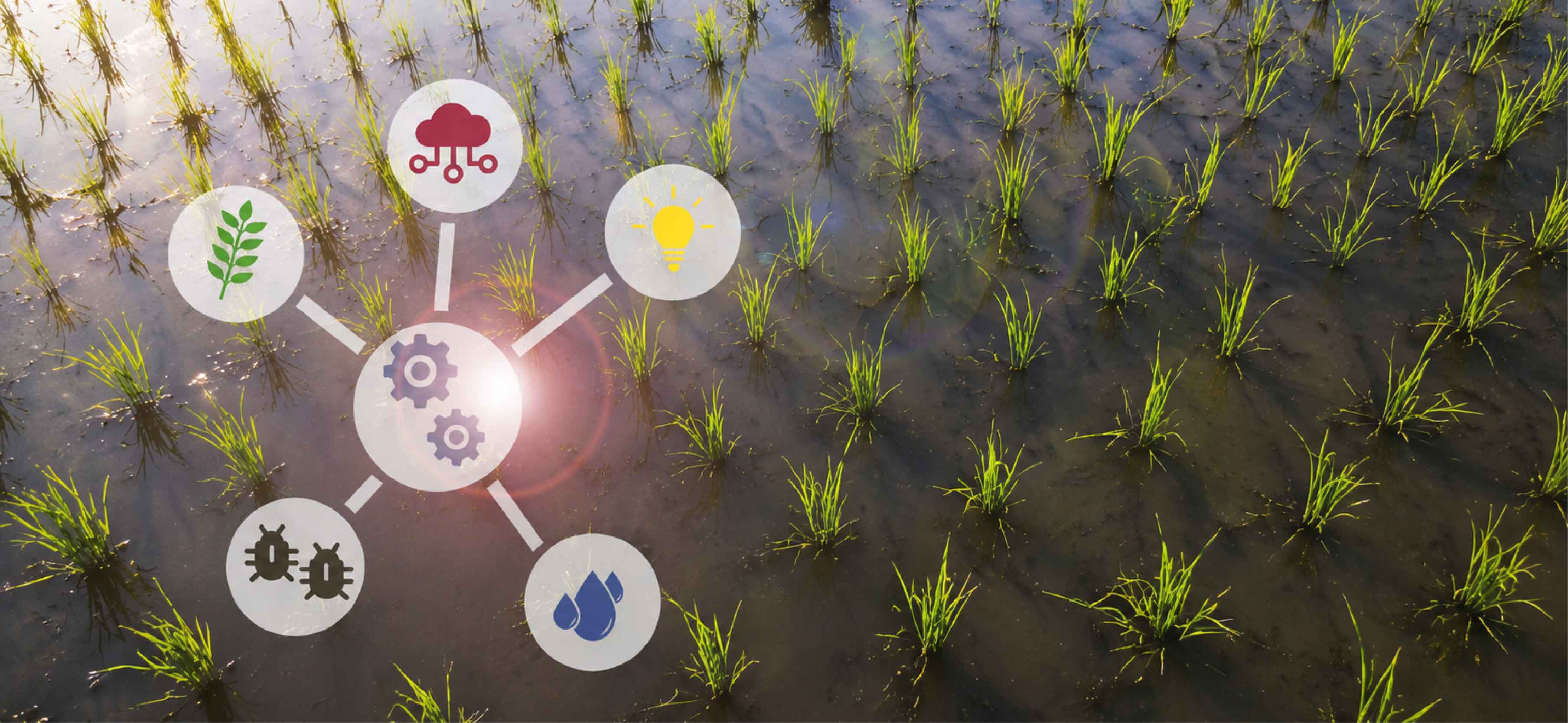
Artificial Intelligence, predictive analytics, satellite imaging, IoT-enabled farming systems, and digital agriculture platforms are already transforming how farmers manage climate risk.
Today, advanced agricultural systems can:
Artificial Intelligence, predictive analytics, satellite imaging, IoT-enabled farming systems, and digital agriculture platforms are already transforming how farmers manage climate risk.
Today, advanced agricultural systems can:
- predict disease outbreaks before visible symptoms appear
- optimize irrigation based on real-time soil conditions
- forecast climate-related yield risks
- improve fertilizer efficiency
- reduce water consumption
- strengthen precision farming practices
FUTURE PREDICTIONS: WHAT HAPPENS NEXT?
Over the next decade, climate resilience is expected to become one of the most influential priorities in global agriculture.
Future food systems may increasingly depend on:
Agriculture is no longer only about production.
It is becoming a global resilience strategy.
Future food systems may increasingly depend on:
- climate-adaptive farming models
- cross-border agricultural research collaboration
- regenerative agriculture investment
- AI-driven food production systems
- sustainable resource management
- One Health integration across agriculture and public health
Agriculture is no longer only about production.
It is becoming a global resilience strategy.
THE NEED FOR GLOBAL COLLABORATION
No single country can solve food system instability alone.
Climate change, food security, water sustainability, zoonotic disease risks, and agricultural resilience are interconnected global challenges that require collaborative research, interdisciplinary innovation, and international knowledge exchange.
This is where global research platforms, sustainability-focused conferences, and cross-sector collaboration become increasingly important.
The future of agriculture may depend not only on innovation itself — but on how effectively the world collaborates to scale it.
Climate change, food security, water sustainability, zoonotic disease risks, and agricultural resilience are interconnected global challenges that require collaborative research, interdisciplinary innovation, and international knowledge exchange.
This is where global research platforms, sustainability-focused conferences, and cross-sector collaboration become increasingly important.
The future of agriculture may depend not only on innovation itself — but on how effectively the world collaborates to scale it.
FAQs
What is climate-resilient agriculture?
Climate-resilient agriculture refers to farming systems and practices designed to adapt to climate change while maintaining productivity, sustainability, and long-term food security.
Why is global collaboration important in climate-resilient agriculture?
What is the future of climate-resilient agriculture?
What is the difference between climate-resilient agriculture and sustainable agriculture?




