
Research Insights 111
Published on 27-02-2026
Climate Change Impact on Animal Health
INTRODUCTION TO CLIMATE CHANGE
Climate change is emerging as one of the most serious global challenges affecting not only humans but also animal health and livestock production. Rising temperatures, irregular rainfall patterns, floods, droughts, and extreme weather events are creating stressful conditions for animals across the world. These environmental changes directly influence animal productivity, immunity, and overall well-being.
IMPACT OF FEED AND WATER
Another major concern is the impact on feed and water availability. Droughts reduce pasture quality and crop yields, leading to nutritional deficiencies in animals. Poor-quality feed can lower productivity and increase vulnerability to disease. Similarly, water scarcity and contamination during floods can cause dehydration and water-borne illnesses.
Climate change also affects animal reproduction and welfare. Stressful environmental conditions disrupt hormonal balance, resulting in lower fertility rates and poor breeding performance. In addition, extreme weather events such as cyclones and floods can displace animals, damage shelters, and increase injury risks.
Climate change also affects animal reproduction and welfare. Stressful environmental conditions disrupt hormonal balance, resulting in lower fertility rates and poor breeding performance. In addition, extreme weather events such as cyclones and floods can displace animals, damage shelters, and increase injury risks.
HEAT STRESS IN LIVESTOCK: CAUSES, EFFECTS, AND PREVENTION
One of the most visible impacts of climate change on animals is heat stress. High temperatures reduce feed intake, milk yield, growth rate, and reproductive efficiency in livestock. Dairy cattle, poultry, and small ruminants are particularly vulnerable. Heat stress can weaken the immune system, making animals more susceptible to infections and metabolic disorders. In severe cases, it may even lead to mortality.
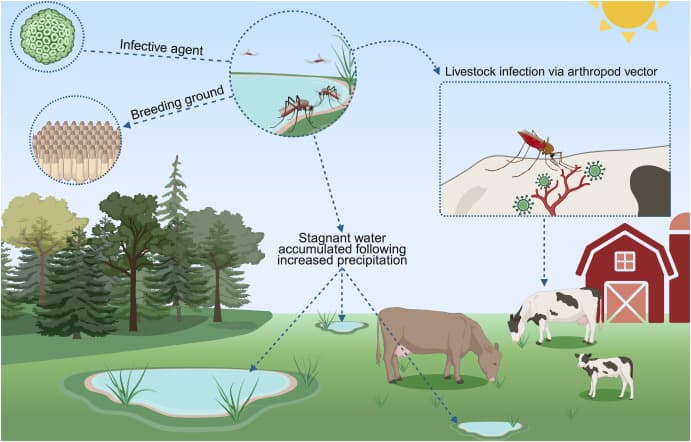
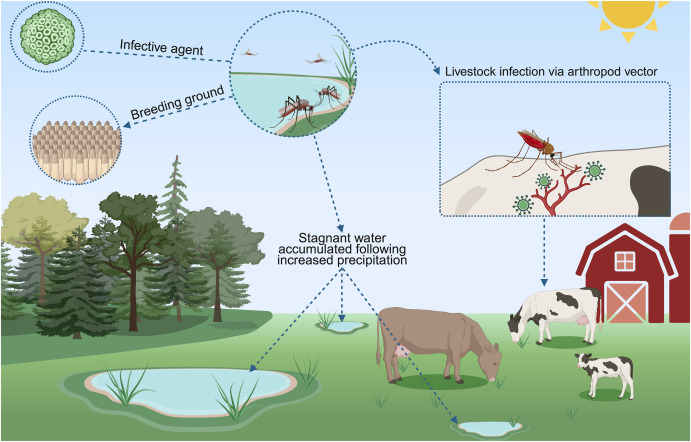
Climate change also contributes to the spread of infectious and vector-borne diseases. Warmer climates allow parasites, ticks, and mosquitoes to survive and expand into new regions. Diseases such as bluetongue, foot-and-mouth disease, lumpy skin disease, and avian influenza may spread more rapidly due to changing environmental conditions. This not only affects animal health but also threatens food security and farmer livelihoods.
Climate change also contributes to the spread of infectious and vector-borne diseases. Warmer climates allow parasites, ticks, and mosquitoes to survive and expand into new regions. Diseases such as bluetongue, foot-and-mouth disease, lumpy skin disease, and avian influenza may spread more rapidly due to changing environmental conditions. This not only affects animal health but also threatens food security and farmer livelihoods.
SAFEGUARDING ANIMAL HEALTH IN A CHANGING CLIMATE
In conclusion, climate change poses significant challenges to animal health, productivity, and global food systems. Proactive management, scientific innovation, and strong veterinary support are crucial to safeguarding animal welfare in a rapidly changing environment.




