
Research Insights 821
Published on 05-03-2026
Climate Change and Its Impact on Crop Production
DESCRIPTION
Climate change has become one of the most significant challenges affecting global agriculture today. Rising temperatures, irregular rainfall patterns, and increasing frequency of extreme weather events are directly influencing crop production across many regions of the world. Farmers are facing difficulties in maintaining stable yields as climatic conditions become more unpredictable each year.
One of the major impacts of climate change on crop production is the increase in temperature. Many crops such as wheat, rice, and maize are sensitive to heat stress, especially during their flowering and grain-filling stages. Higher temperatures can reduce crop growth, shorten the growing season, and ultimately decrease overall productivity. In some regions, excessive heat may even lead to complete crop failure.
Changes in rainfall patterns also pose serious challenges for agriculture. Some areas experience prolonged droughts while others face heavy rainfall and flooding. Drought conditions limit soil moisture and reduce water availability for crops, leading to poor growth and lower yields. On the other hand, excessive rainfall can cause soil erosion, nutrient loss, and waterlogging, which negatively affect plant health.
Climate change also increases the risk of pests and plant diseases. Warmer temperatures and humid conditions create favorable environments for insects, pathogens, and weeds to thrive. As a result, farmers may need to invest more in pest and disease management, which increases production costs and can impact environmental sustainability.
Despite these challenges, adopting climate-resilient agricultural practices can help mitigate the effects of climate change. Techniques such as drought-tolerant crop varieties, improved irrigation systems, crop diversification, and sustainable soil management can enhance farm resilience. By integrating modern technologies and adaptive farming strategies, agriculture can continue to support global food security even under changing climatic conditions.
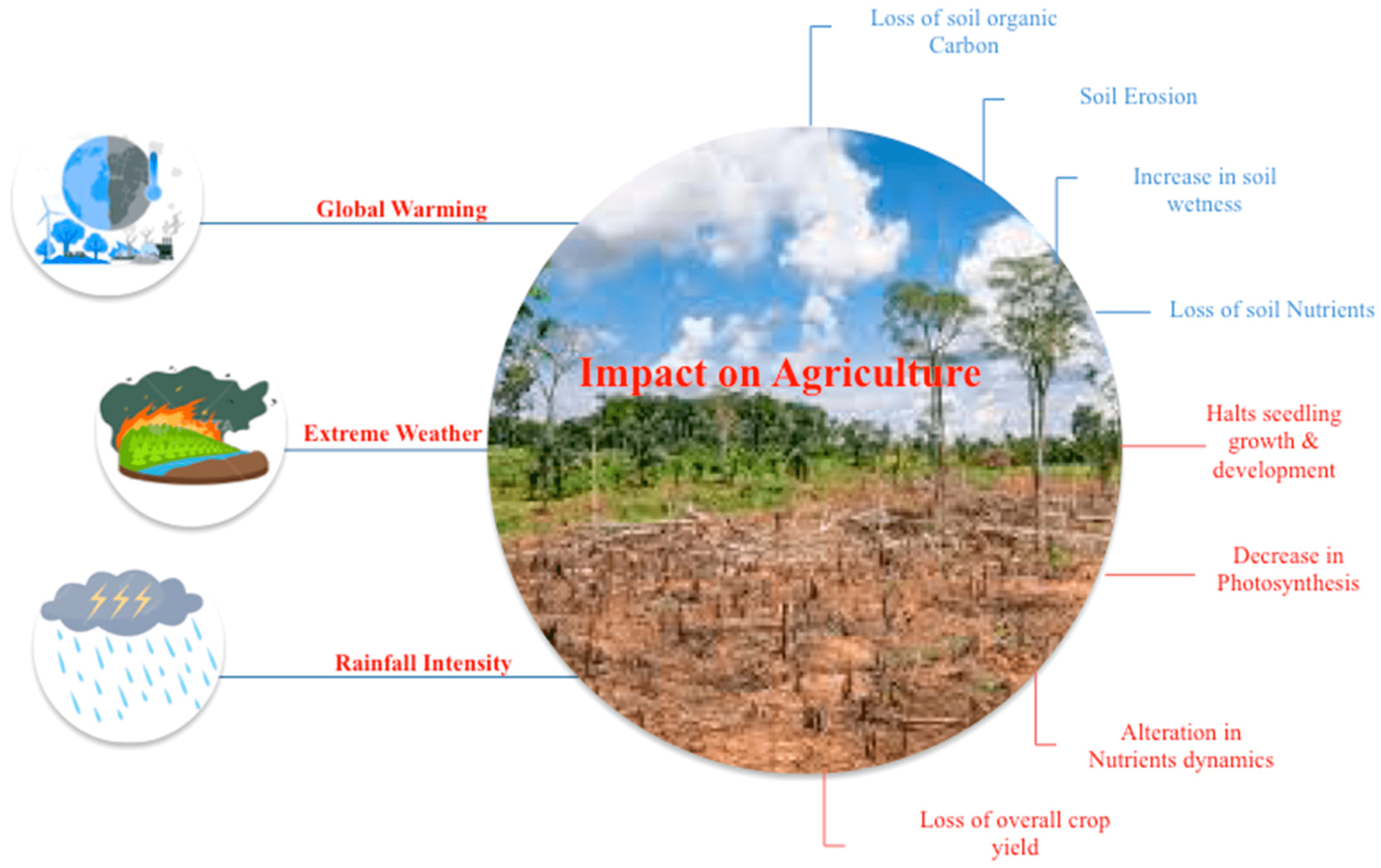
@Figure1
In conclusion, climate change is significantly influencing crop production by altering temperature patterns, rainfall distribution, and the occurrence of pests and diseases. These changes pose serious challenges to farmers and threaten global food security. However, through the adoption of sustainable agricultural practices, climate-resilient crop varieties, and improved farm management strategies, it is possible to reduce these negative impacts. Strengthening research, technology adoption, and farmer awareness will play a vital role in helping agriculture adapt to a changing climate and ensuring stable food production for the future.
One of the major impacts of climate change on crop production is the increase in temperature. Many crops such as wheat, rice, and maize are sensitive to heat stress, especially during their flowering and grain-filling stages. Higher temperatures can reduce crop growth, shorten the growing season, and ultimately decrease overall productivity. In some regions, excessive heat may even lead to complete crop failure.
Changes in rainfall patterns also pose serious challenges for agriculture. Some areas experience prolonged droughts while others face heavy rainfall and flooding. Drought conditions limit soil moisture and reduce water availability for crops, leading to poor growth and lower yields. On the other hand, excessive rainfall can cause soil erosion, nutrient loss, and waterlogging, which negatively affect plant health.
Climate change also increases the risk of pests and plant diseases. Warmer temperatures and humid conditions create favorable environments for insects, pathogens, and weeds to thrive. As a result, farmers may need to invest more in pest and disease management, which increases production costs and can impact environmental sustainability.
Despite these challenges, adopting climate-resilient agricultural practices can help mitigate the effects of climate change. Techniques such as drought-tolerant crop varieties, improved irrigation systems, crop diversification, and sustainable soil management can enhance farm resilience. By integrating modern technologies and adaptive farming strategies, agriculture can continue to support global food security even under changing climatic conditions.
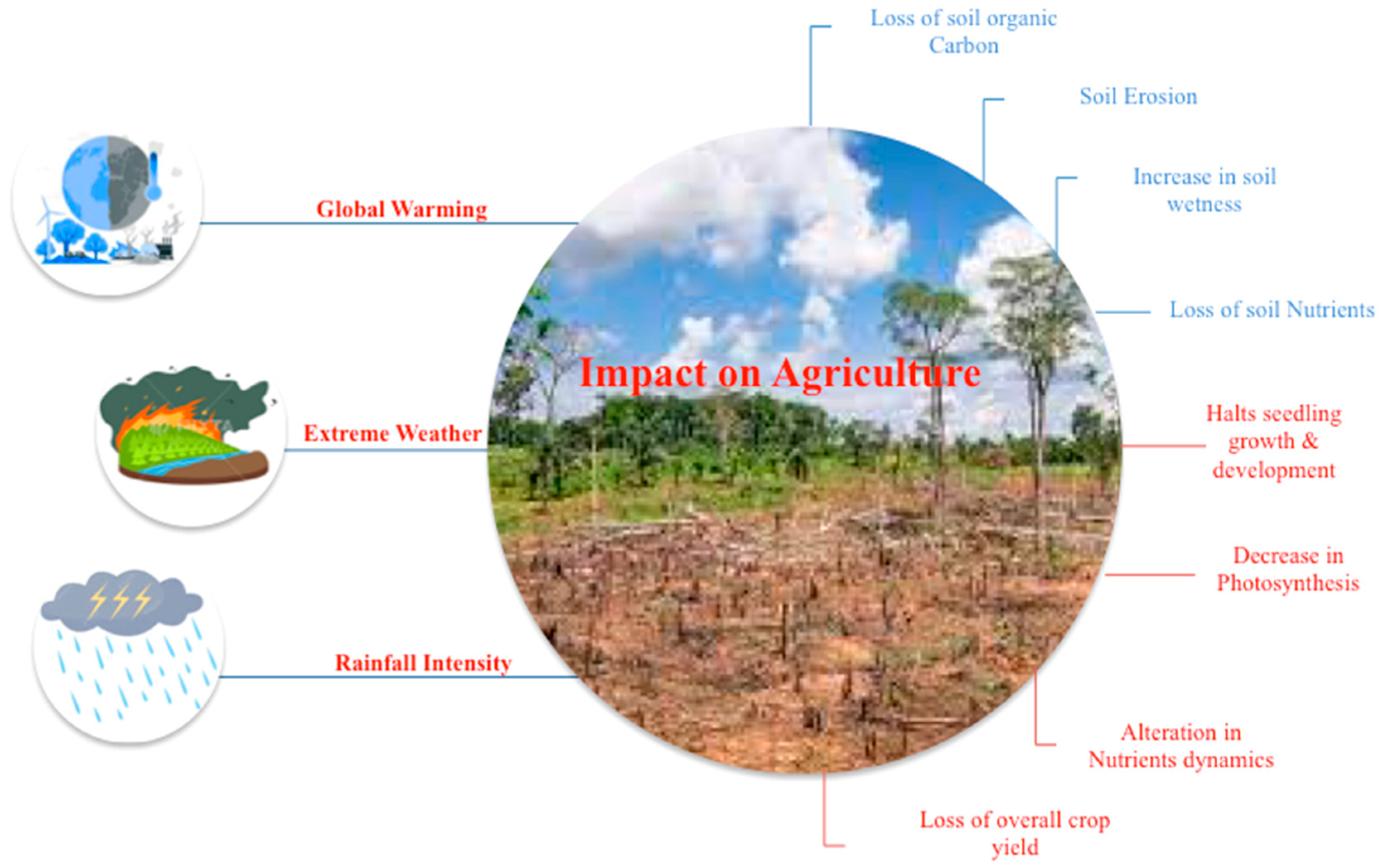
@Figure1
In conclusion, climate change is significantly influencing crop production by altering temperature patterns, rainfall distribution, and the occurrence of pests and diseases. These changes pose serious challenges to farmers and threaten global food security. However, through the adoption of sustainable agricultural practices, climate-resilient crop varieties, and improved farm management strategies, it is possible to reduce these negative impacts. Strengthening research, technology adoption, and farmer awareness will play a vital role in helping agriculture adapt to a changing climate and ensuring stable food production for the future.




