
Industry News 10
Published on 09-02-2026
Future of Human–Robot Collaboration on Farms
THE FUTURE OF SMART FARMING
Agriculture is entering a transformative phase where humans and robots work side by side to meet the growing demands of food production. Rising labor shortages, increasing costs, and climate-related uncertainties are pushing farms to adopt intelligent robotic systems. Rather than replacing farmers, these technologies are designed to support them by taking over repetitive, labor-intensive, and high-precision tasks, allowing humans to focus on planning, supervision, and decision-making
HOW ROBOTS AND FARMERS WORK TOGETHER IN MODERN AGRICULTURE
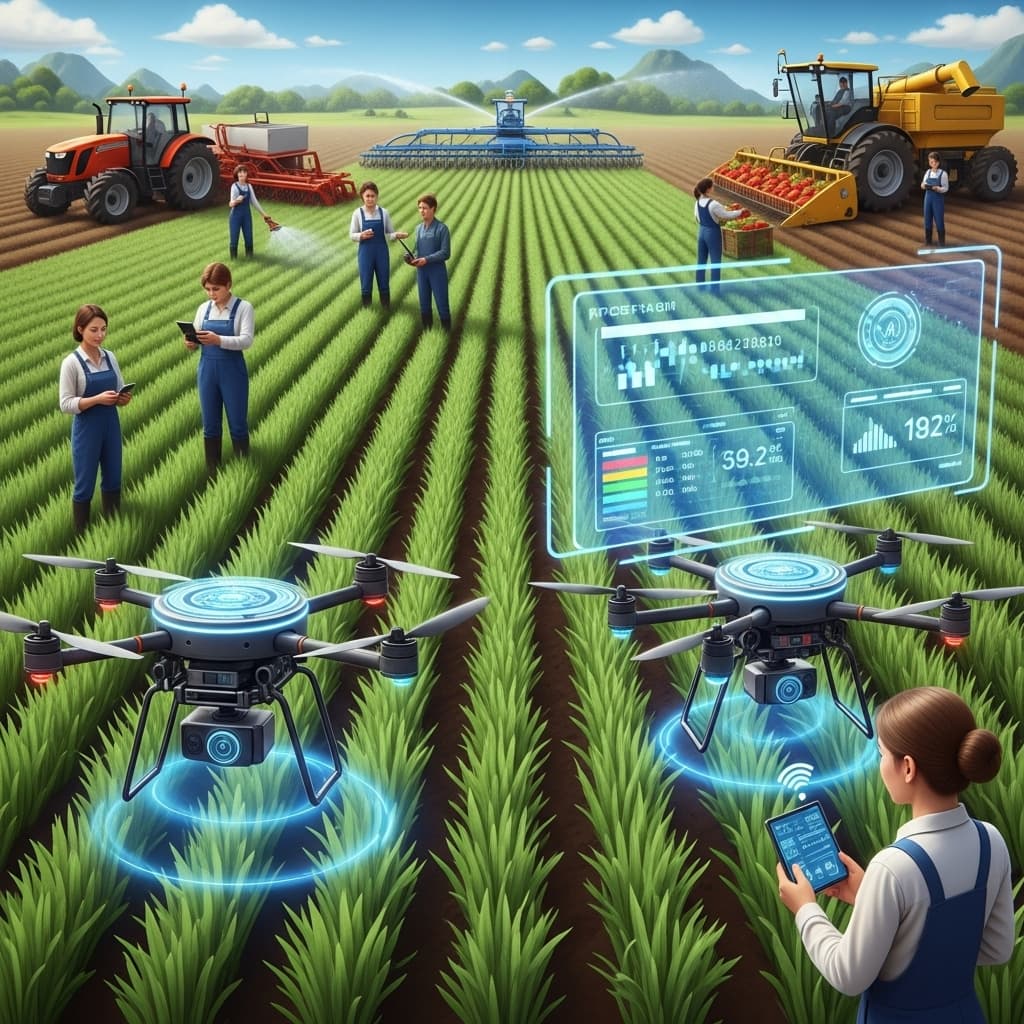
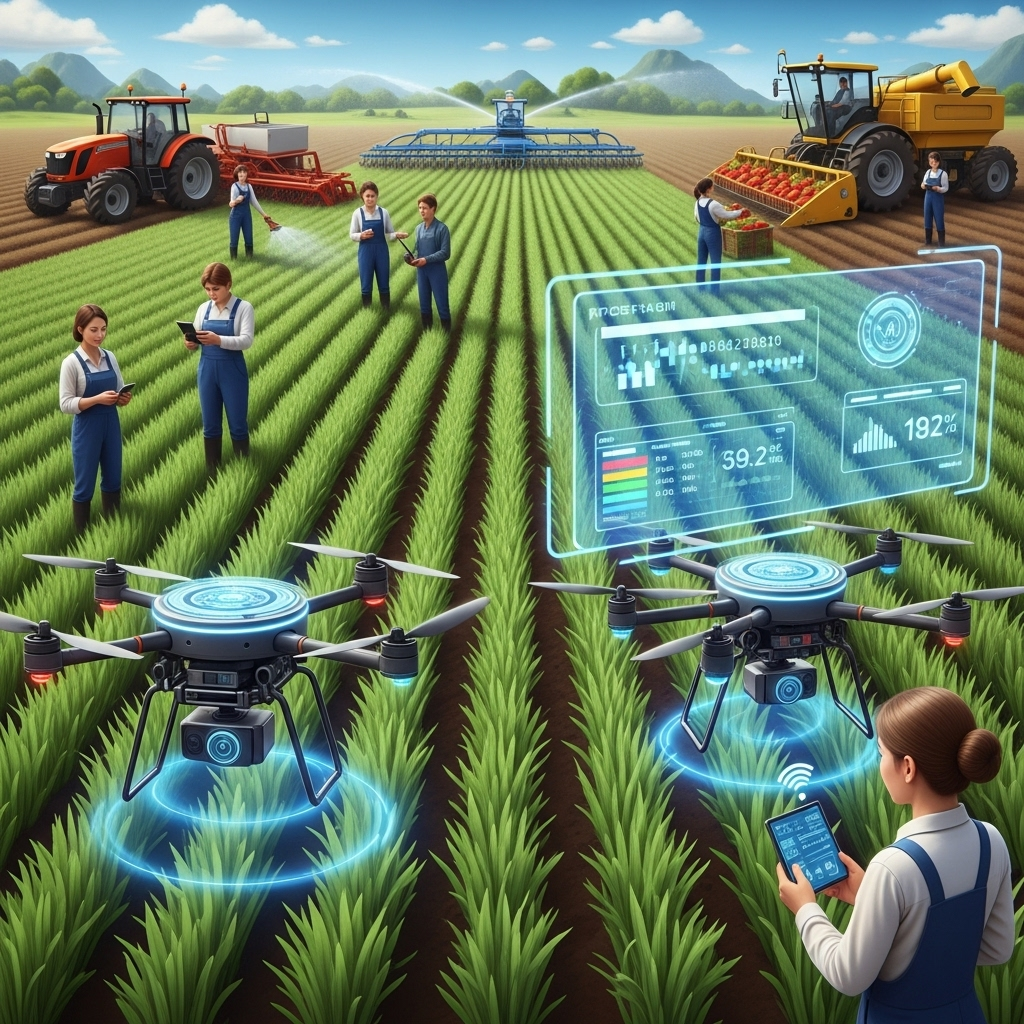
Human–robot collaboration on farms is powered by advances in artificial intelligence, sensors, and computer vision. Robots can now identify crops and weeds, assess plant health, monitor soil conditions, and perform tasks such as seeding, spraying, and harvesting with remarkable accuracy. Farmers provide contextual knowledge and real-time judgment, ensuring that robotic actions align with farm-specific goals and environmental conditions.
Modern agriculture is rapidly evolving as farmers and robots begin working together to address the growing challenges of food production. With increasing labor shortages, rising operational costs, and the need for higher efficiency, robotic technologies are becoming valuable partners on the farm. Rather than replacing human labor, these machines are designed to assist farmers by performing repetitive, time-consuming, and precision-based tasks, allowing farmers to focus on decision-making and farm management.
In the near future, collaborative robots—or cobots—will become more common, especially in small and medium-sized farms. These machines are designed to operate safely alongside humans and can be controlled through user-friendly dashboards, mobile applications, or voice-based systems. This ease of interaction will lower the technological barrier and encourage wider adoption across diverse agricultural systems.
Modern agriculture is rapidly evolving as farmers and robots begin working together to address the growing challenges of food production. With increasing labor shortages, rising operational costs, and the need for higher efficiency, robotic technologies are becoming valuable partners on the farm. Rather than replacing human labor, these machines are designed to assist farmers by performing repetitive, time-consuming, and precision-based tasks, allowing farmers to focus on decision-making and farm management.
In the near future, collaborative robots—or cobots—will become more common, especially in small and medium-sized farms. These machines are designed to operate safely alongside humans and can be controlled through user-friendly dashboards, mobile applications, or voice-based systems. This ease of interaction will lower the technological barrier and encourage wider adoption across diverse agricultural systems.
FUTURE ROLE OF FARMERS
Over time, the farmer’s role will evolve from manual labor to that of a technology-enabled farm manager. Training, digital literacy, and supportive policies will be essential to ensure equitable access to robotic technologies. With the right balance between human expertise and robotic efficiency, the future of farming will be more productive, resilient, and sustainable—driven by collaboration rather than replacement.




