
Industry News 22
Extreme Heat and Agriculture: Global Risks to Crops, Livestock, Fisheries and Farm Workers
EXTREME HEAT AND AGRICULTURE
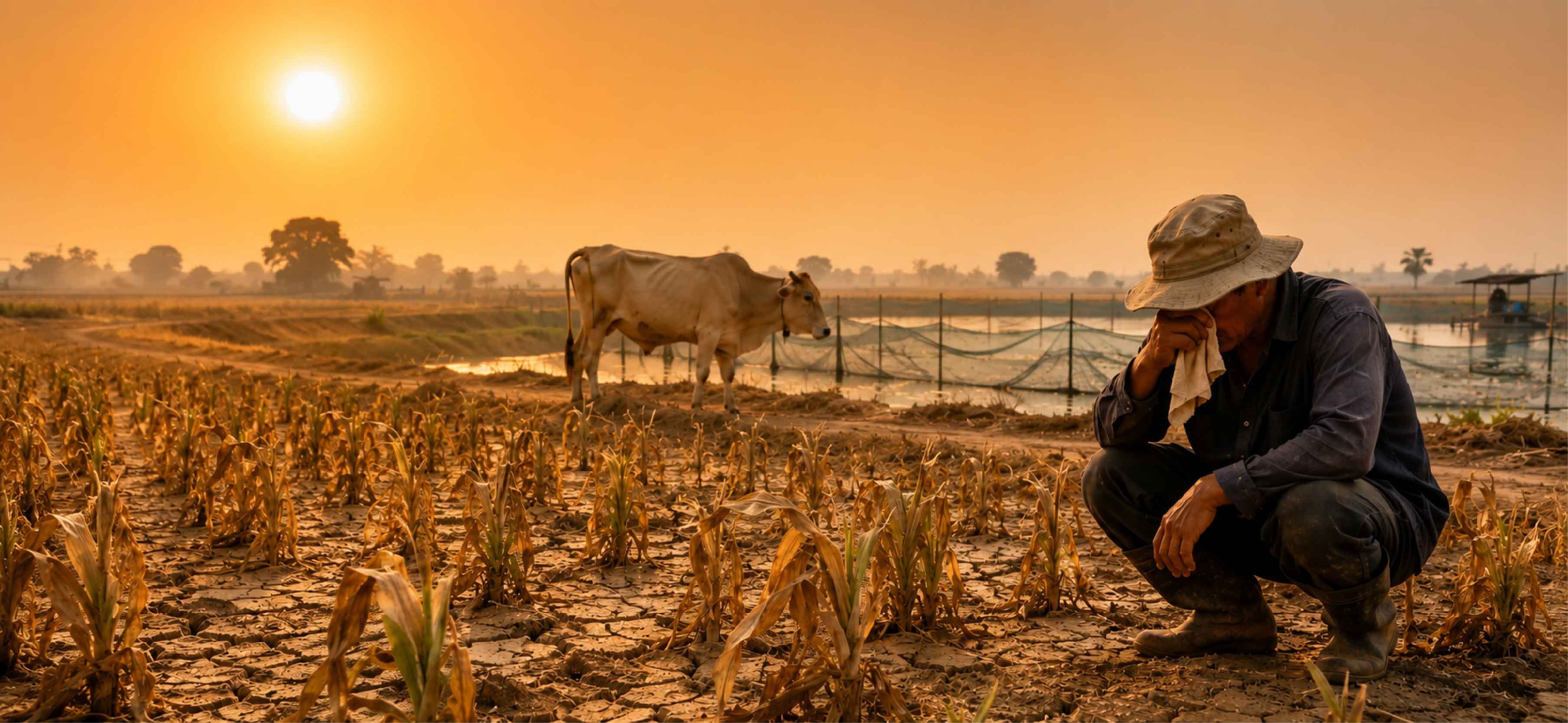
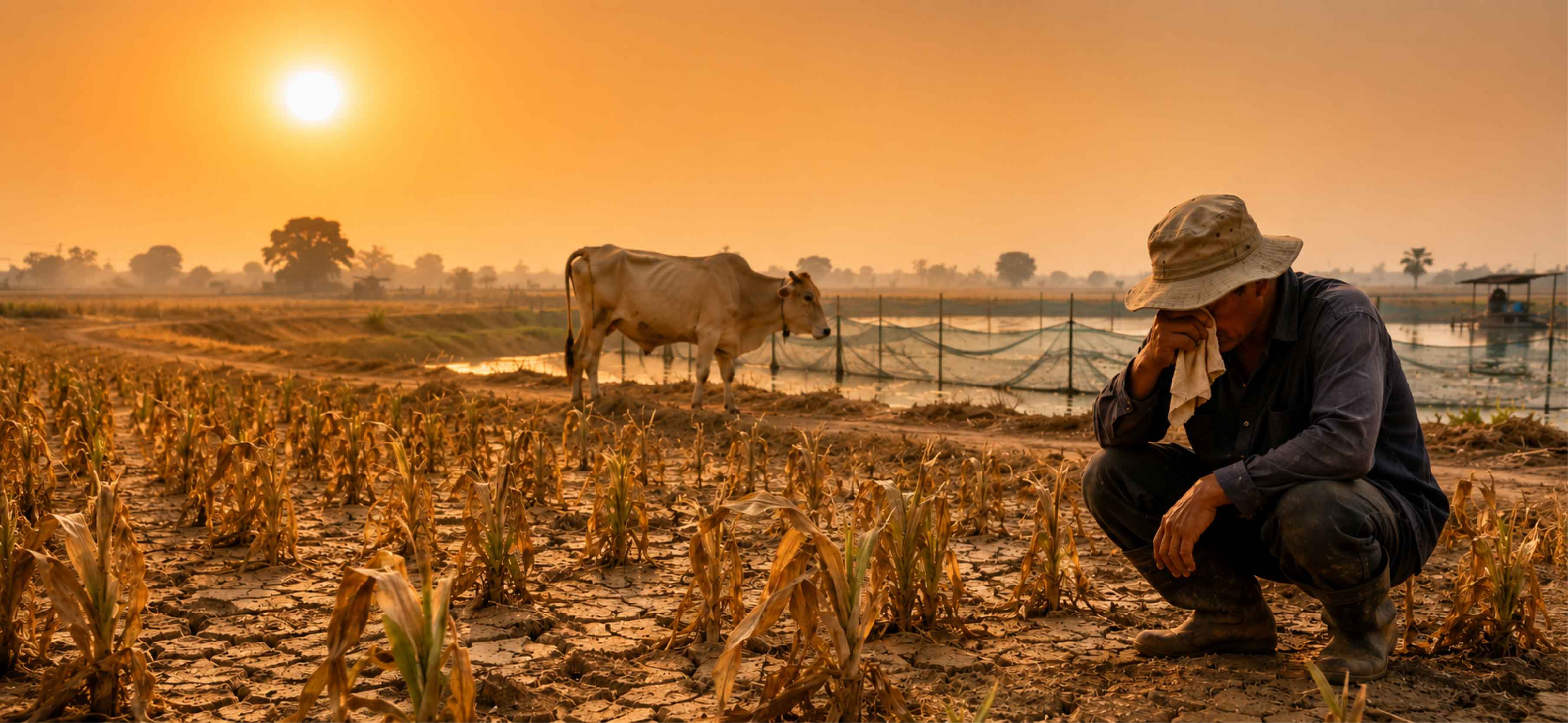
Its effects are no longer limited to visibly damaged crops or temporary reductions in farm productivity. Prolonged high temperatures can disrupt plant development, increase livestock stress, reduce oxygen in aquatic environments, intensify water scarcity and make outdoor agricultural work dangerous.
This means extreme heat must be understood not simply as a weather event, but as a global food-system risk.
WHAT IS THE IMPACT OF EXTREME HEAT ON AGRICULTURE?
It can reduce crop yields, lower livestock productivity, increase water demand, weaken disease resistance, affect fish survival and reduce the number of hours during which agricultural workers can operate safely.
The greatest risk emerges when heat combines with drought, water scarcity, humidity, wildfires, pests, diseases or weak agricultural infrastructure.
KEY TAKEAWAYS
-
Extreme heat affects every major component of agrifood systems.
-
Crops can experience reduced pollination, impaired growth and lower yields.
-
Livestock may eat less, produce less and face greater health and reproductive risks.
-
Warmer aquatic environments can reduce dissolved oxygen and increase disease pressure.
-
Farm workers face serious occupational-health and productivity risks.
-
Early warnings, climate services, heat-resilient genetics and adapted management can reduce losses.
-
Long-term resilience requires research, investment, insurance and coordinated public policy.
WHY IS EXTREME HEAT MORE THAN A TEMPORARY WEATHER PROBLEM?
When temperatures move beyond those ranges, plants and animals must use additional energy simply to survive. If the exposure continues, growth, reproduction, immunity and productivity begin to decline.
Extreme heat can also increase evaporation, intensify irrigation demand and accelerate moisture loss from soil. When heat occurs alongside drought or limited water availability, the damage becomes significantly more difficult to manage.
The result is a chain of connected risks affecting farms, food prices, rural employment, supply chains and national food security.
HOW DOES EXTREME HEAT AFFECT CROPS?
High temperatures can:
- Reduce photosynthesis
- Damage pollen and lower fertilization
- Shorten crop-growth periods
- Accelerate soil-moisture loss
- Increase plant respiration
- Reduce grain, fruit or vegetable quality
- Increase susceptibility to pests and diseases
- Cause premature crop maturity
- Reduce overall yield stability
This is why agricultural research must move beyond studying average seasonal temperatures. Researchers increasingly need to examine the timing, duration, night-time temperatures and interaction of heat with humidity, soil moisture and crop development.
HOW DOES HEAT STRESS AFFECT LIVESTOCK?
During periods of high temperature and humidity, that process becomes less effective.
Heat-stressed animals may:
- Seek shade more frequently
- Increase water consumption
- Reduce feed intake
- Move less
- Produce less milk, meat or eggs
- Experience reduced fertility
- Become more vulnerable to disease
- Face organ stress under prolonged exposure
The effects are not restricted to large commercial farms. Small livestock producers may face even greater risks when access to shade, ventilation, cooling systems, reliable water or veterinary services is limited.
Heat adaptation in livestock therefore requires a combination of housing design, water management, nutrition, genetics, health surveillance and early-warning information.
WHAT DOES EXTREME HEAT MEAN FOR FISHERIES AND AQUACULTURE?
However, warmer water contains less dissolved oxygen. Fish must then increase respiration while having less oxygen available to support it.
Extreme water temperatures can:
- Reduce feeding and growth
- Increase physiological stress
- Affect reproduction
- Raise the risk of disease outbreaks
- Increase mortality
- Alter the distribution of aquatic species
- Disrupt pond, lake, river and coastal ecosystems
Climate-resilient aquaculture will increasingly depend on integrating environmental monitoring with fish-health management.
HOW DOES EXTREME HEAT AFFECT AGRICULTURAL WORKERS?
Farm workers, livestock handlers, fishers, forestry workers and food-chain labourers may be exposed to direct sunlight, humidity and physically demanding work for extended periods.
Heat exposure can cause:
- Dehydration
- Heat exhaustion
- Heatstroke
- Reduced concentration
- Lower physical capacity
- Greater risk of workplace accidents
- Lost working hours
- Long-term health consequences
Worker protection should be treated as an essential part of climate-resilient agriculture rather than as a separate labour issue.
WHY DOES EXTREME HEAT CREATE COMPOUND AGRICULTURAL RISKS?
It can combine with:
- Drought and water scarcity
- Wildfire risk
- Soil degradation
- Pest expansion
- Animal and plant diseases
- Power disruptions
- High irrigation demand
- Feed shortages
- Market instability
- Rural poverty
These overlapping pressures can turn a climatic hazard into a financial and food-security crisis.
WHICH REGIONS FACE THE GREATEST RISKS?
South Asia faces major risks related to outdoor labour, densely populated farming regions and high night-time temperatures.
Parts of Africa face the combined pressure of rising temperatures, water scarcity, limited climate services and dependence on rain-fed agriculture.
The Middle East and North Africa must manage extreme heat alongside severe water constraints.
Europe is experiencing increasing risks to crops, livestock and rural landscapes during prolonged heatwaves.
Latin America and the Caribbean face changing heat, rainfall, wildfire and ecosystem conditions across highly diverse production systems.
Regional adaptation must therefore reflect local crops, livestock species, water systems, farm sizes and economic conditions. A single universal solution will not be sufficient.
HOW CAN AGRICULTURE ADAPT TO EXTREME HEAT?
1. Improve Early-Warning Systems
Farmers need forecasts that translate temperature data into practical agricultural decisions. Warnings should indicate when to irrigate, change feeding schedules, move livestock, activate cooling, adjust working hours or prepare aquaculture systems.
2. Develop Heat-Resilient Crops and Animals
Selective breeding, genomic research and biotechnology can support varieties and breeds that maintain productivity under higher temperatures.Resilience should be evaluated across real farming environments rather than only under controlled conditions.
3. Adjust Agricultural Calendars
Changing planting dates, harvesting periods and livestock-management schedules can reduce exposure during the most dangerous temperature periods.
4. Improve Water and Soil Management
Efficient irrigation, mulching, soil organic matter, rainwater storage and moisture conservation can help protect crops and reduce heat-related water stress.
5. Redesign Livestock Housing
Shade, ventilation, cooling, reflective roofing and reliable access to water can lower animal exposure.
6. Strengthen Aquaculture Monitoring
Temperature, dissolved oxygen, pH and other water-quality parameters should be monitored together. Alerts must be connected to clear action protocols.
7. Protect Agricultural Workers
Heat-safety standards should include rest breaks, hydration, shaded areas, flexible working hours and emergency-response training.
8. Expand Financial Protection
Insurance, emergency finance, social protection and risk-sharing mechanisms can help producers recover without abandoning productive assets.
WHAT RESEARCH IS NEEDED NEXT?
-
Crop and livestock thresholds under local conditions
-
Combined heat and humidity effects
-
Night-time heat exposure
-
Heat interactions with pests and disease
-
Water and energy demand during heat events
-
Low-cost cooling for small farms
-
Climate-resilient aquaculture
-
Occupational heat protection
-
Economic losses across agricultural value chains
-
Adaptation solutions suitable for smallholders
CONCLUSION
Its effects extend from crop fields and livestock farms to ponds, fisheries, forests, labour systems and food markets.
Agricultural resilience will depend on how successfully climate science, biological research, farm management, early-warning systems, worker protection and public policy are connected.
The question is no longer whether agriculture will need to adapt to extreme heat.
The question is whether research, institutions and investment can move quickly enough to protect the people and biological systems responsible for feeding the world.




